Product

A booking platform for deaf and blind users to book navigators and translators independently.

Product

A booking platform for deaf and blind users to book navigators and translators independently.

Product

A booking platform for deaf and blind users to book navigators and translators independently.

Product

A booking platform for deaf and blind users to book navigators and translators independently.

Project Impact

Project Impact

  • Transformed a previously support-dependent process, into a fully self-navigable experience for DeafBlind users.

  • Redesigned and simplified multi-step intake forms (e.g., medical history, legal consent), reducing completion time for both users and service providers.

  • Laid the foundation for faster product growth by building a scalable, reusable design system.

  • Transformed a previously support-dependent process, into a fully self-navigable experience for DeafBlind users.

  • Redesigned and simplified multi-step intake forms (e.g., medical history, legal consent), reducing completion time for both users and service providers.

  • Laid the foundation for faster product growth by building a scalable, reusable design system.

My Role (UX Designer)

My Role (UX Designer)

  • Designed the step-by-step flow of the booking process so it was clear, easy to follow, and worked well with assistive technology.

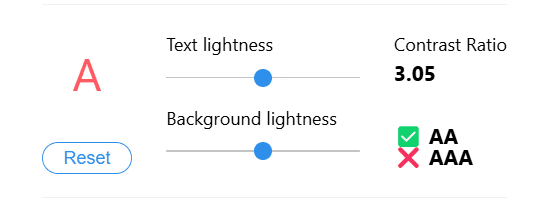
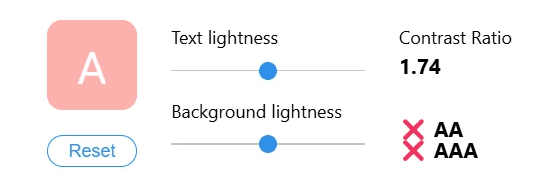
  • Made sure designs met accessibility guidelines, by using good color contrast and making forms easy to use with a keyboard or screen reader.

  • Put together clean prototypes and notes for developers so the designs were easy to build.
  • Designed the step-by-step flow of the booking process so it was clear, easy to follow, and worked well with assistive technology.

  • Made sure designs met accessibility guidelines, by using good color contrast and making forms easy to use with a keyboard or screen reader.

  • Put together clean prototypes and notes for developers so the designs were easy to build.

Team

  • UX Design Lead

  • UX Researcher

  • 2 Developers

  • Company Founder

Timeline

6 Months

Tools

Figma, Zoom, Slack, and Google Sheets

WCAG

Design System

B2C

Accessibility

Research

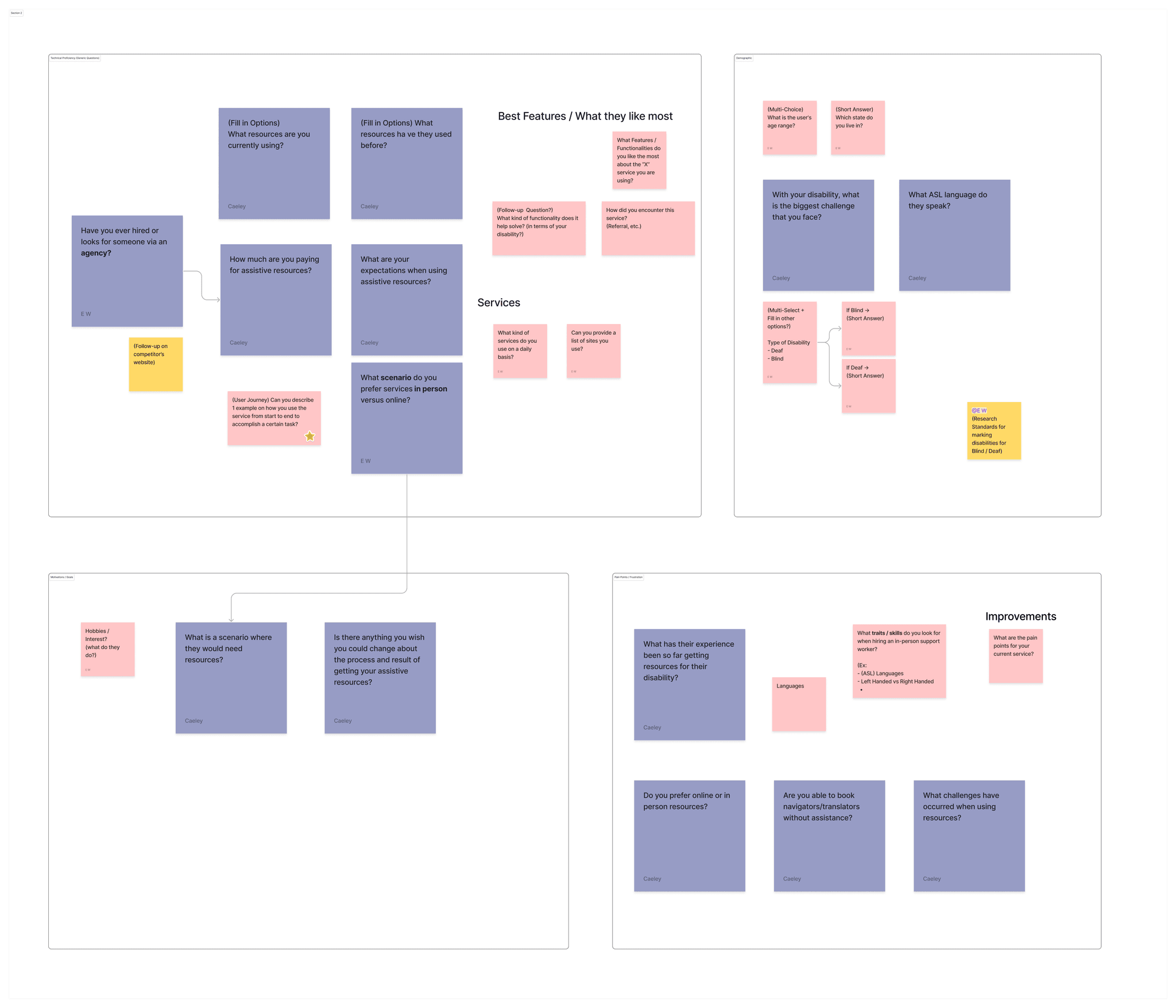
People who are blind and deaf face many challenges when booking navigators and translators independently.

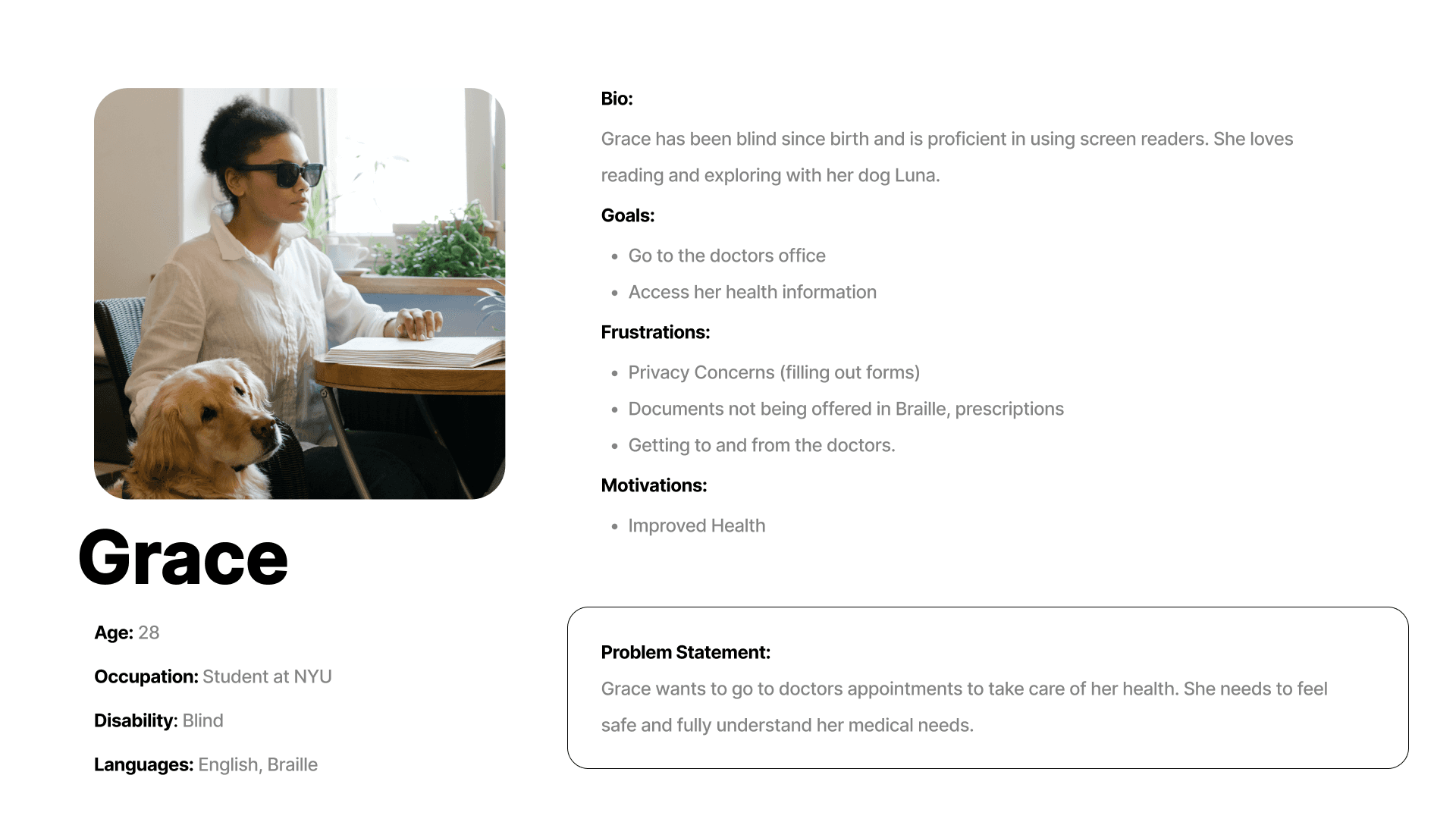
User Persona

Insights

  • Users with disabilities strongly value independence and prefer tools that support self-reliance.

  • Navigators and translators are essential in specific contexts, such as travel or professional events.

  • Booking needs vary widely, depending on each user’s communication style, preferences, and situation.

  • There is frequent confusion on the day of service, including mismatches in language, and arrival logistics.

  • Users with disabilities strongly value independence and prefer tools that support self-reliance.

  • Navigators and translators are essential in specific contexts, such as travel or professional events.

  • Booking needs vary widely, depending on each user’s communication style, preferences, and situation.

  • There is frequent confusion on the day of service, including mismatches in language, and arrival logistics.

  • In the United States, up to 1 in 4 (27%) adults have a disability, including mobility, cognition, hearing, vision, and independent living impairments.

  • 95.9% of the world's top one million web pages have accessibility errors, making digital content less accessible to those with disabilities.

  • In the United States, up to 1 in 4 (27%) adults have a disability, including mobility, cognition, hearing, vision, and independent living impairments.

  • 95.9% of the world's top one million web pages have accessibility errors, making digital content less accessible to those with disabilities.

Problem Space

Current booking sites are not meeting accessibility standards, leaving users with disabilities unable to book without help.
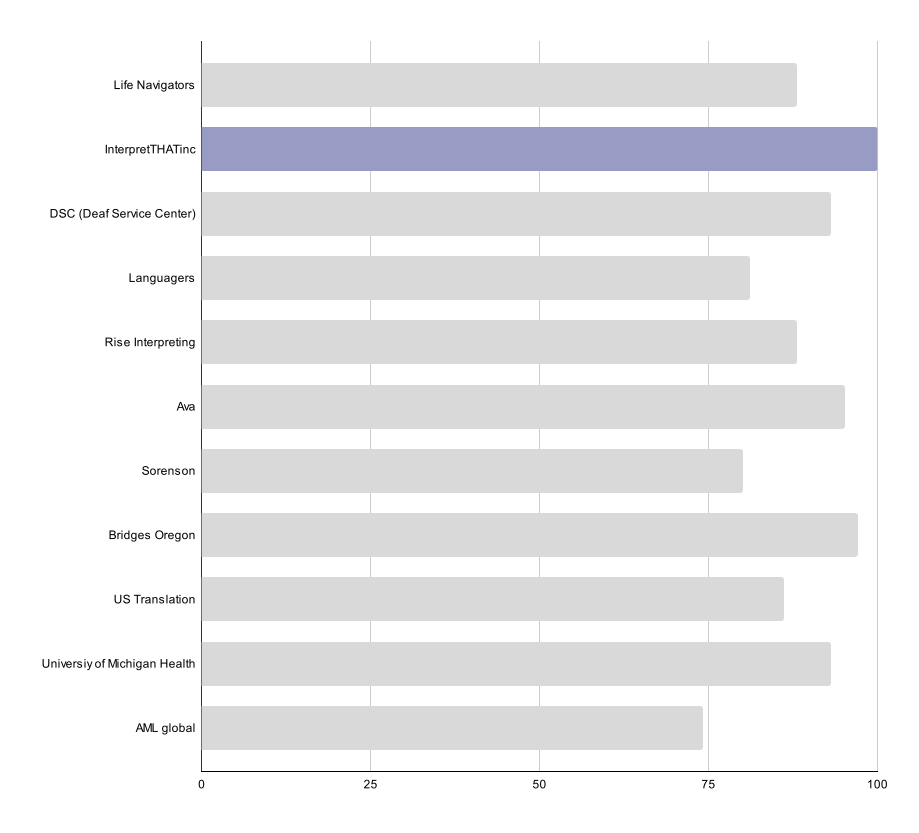
Any score less than 100 is not accessible.

Competitor Rantings

Websites for Blind Users are not Accessible

Insights

  • 9/10 competitor websites investigated failed basic accessibility standards.

  • Any score less than 100 does not meet accessibility standards

  • 9/10 competitor websites investigated failed basic accessibility standards.

  • Any score less than 100 does not meet accessibility standards

Ideation

Rethinking the Mizaru experience through the lens
of inclusion.

UI isn't Accessible to Users

Issues

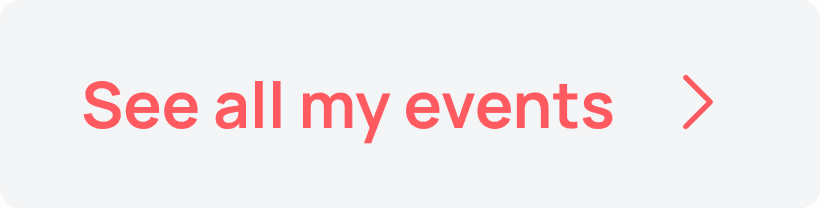
  • Color combinations don't have enough contrast.

  • The design is visually overwhelming, with too many icons and interactions.

  • Content wasn’t developed with screen readers in mind.

Old UI

User Pain Points

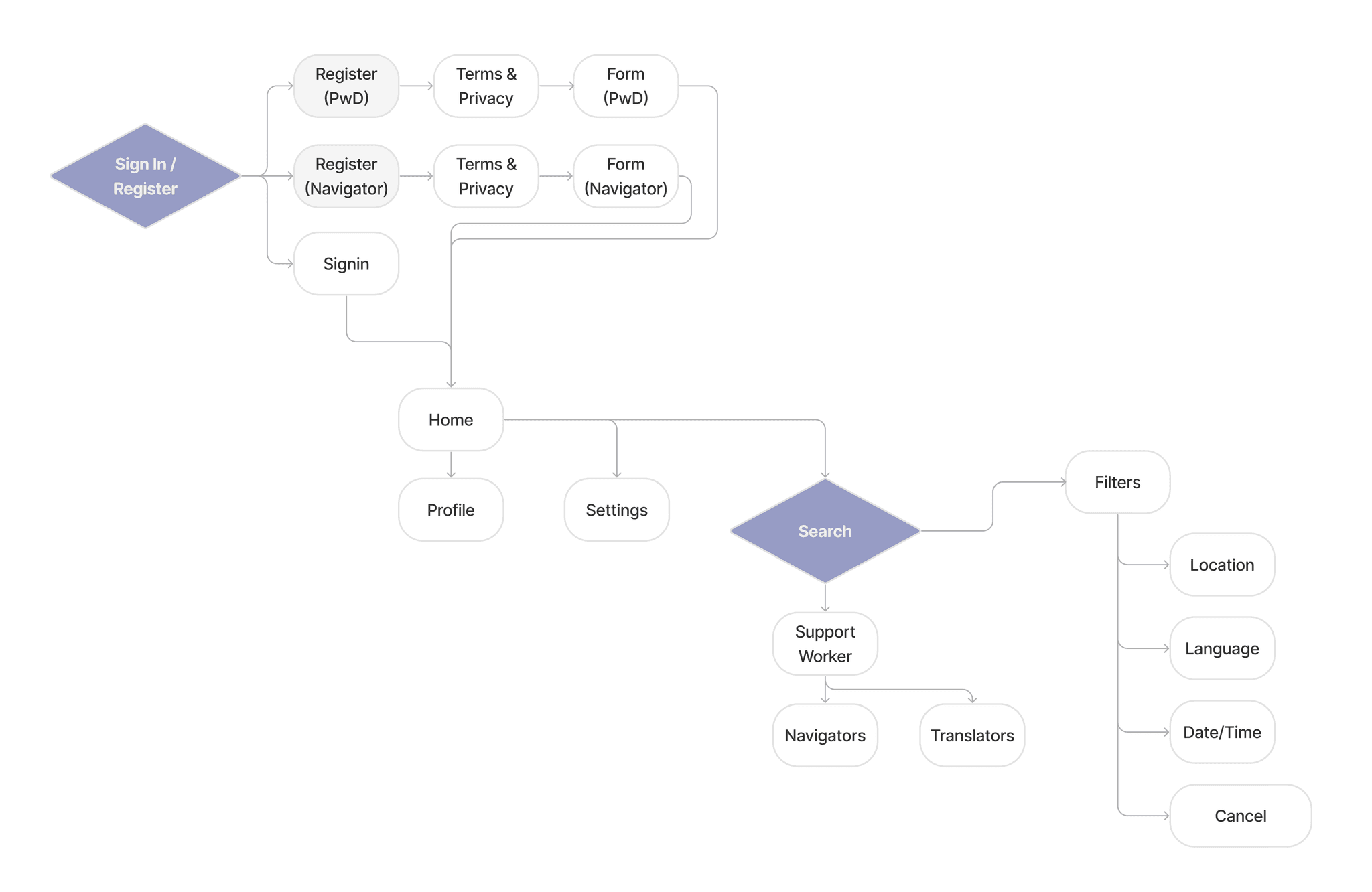
Flow Diagram

Complex Flows

Focus Areas

  • Streamlining onboarding for both users and service providers (navigators and translators), making the lengthy account setup faster.

  • Revisiting the competitive analysis to see where Mizaru can differentiate itself.

  • Redesigning flows to better support user independence, reduce confusion during booking, and ensure a seamless end-to-end experience.

Final Design

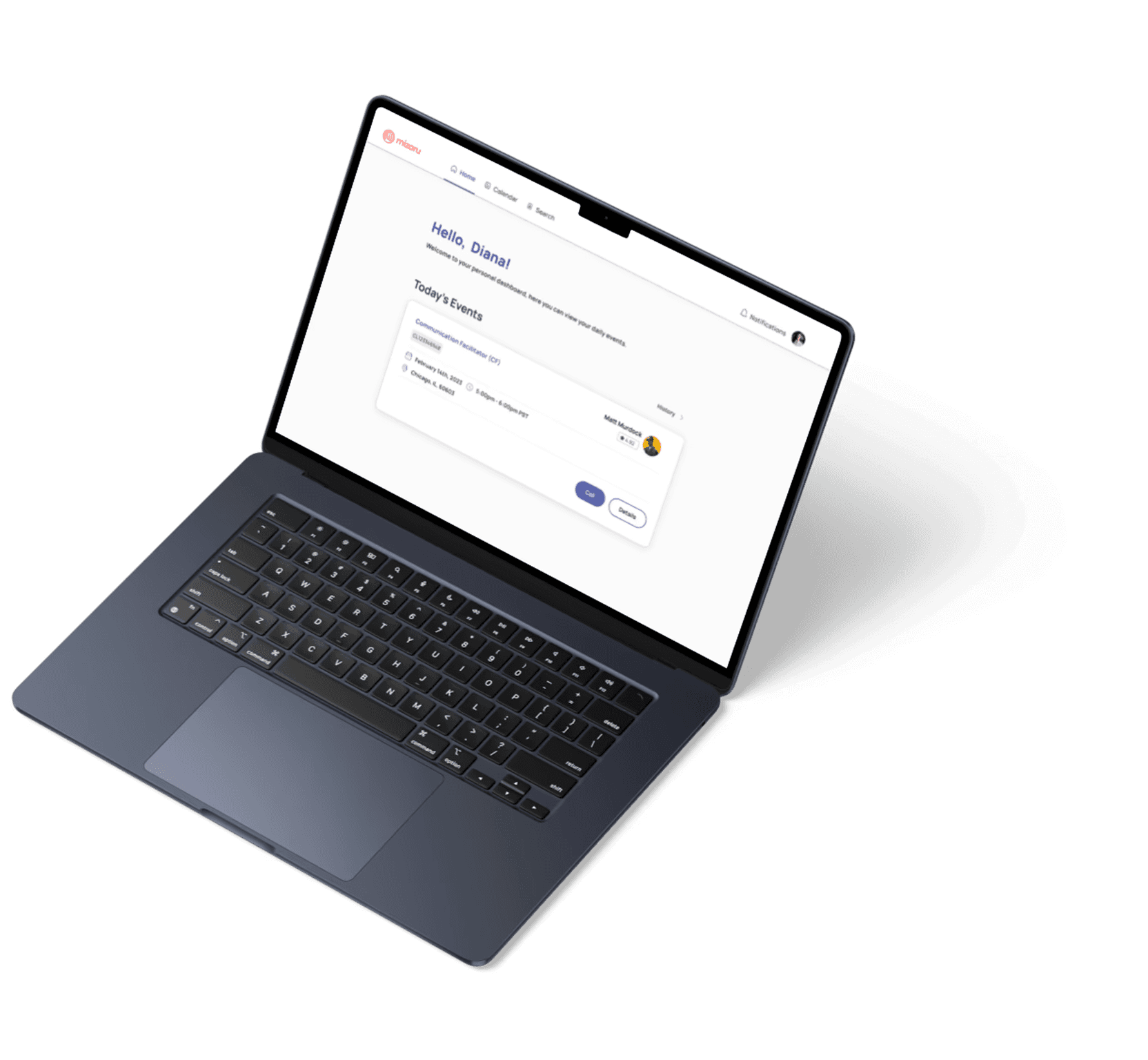
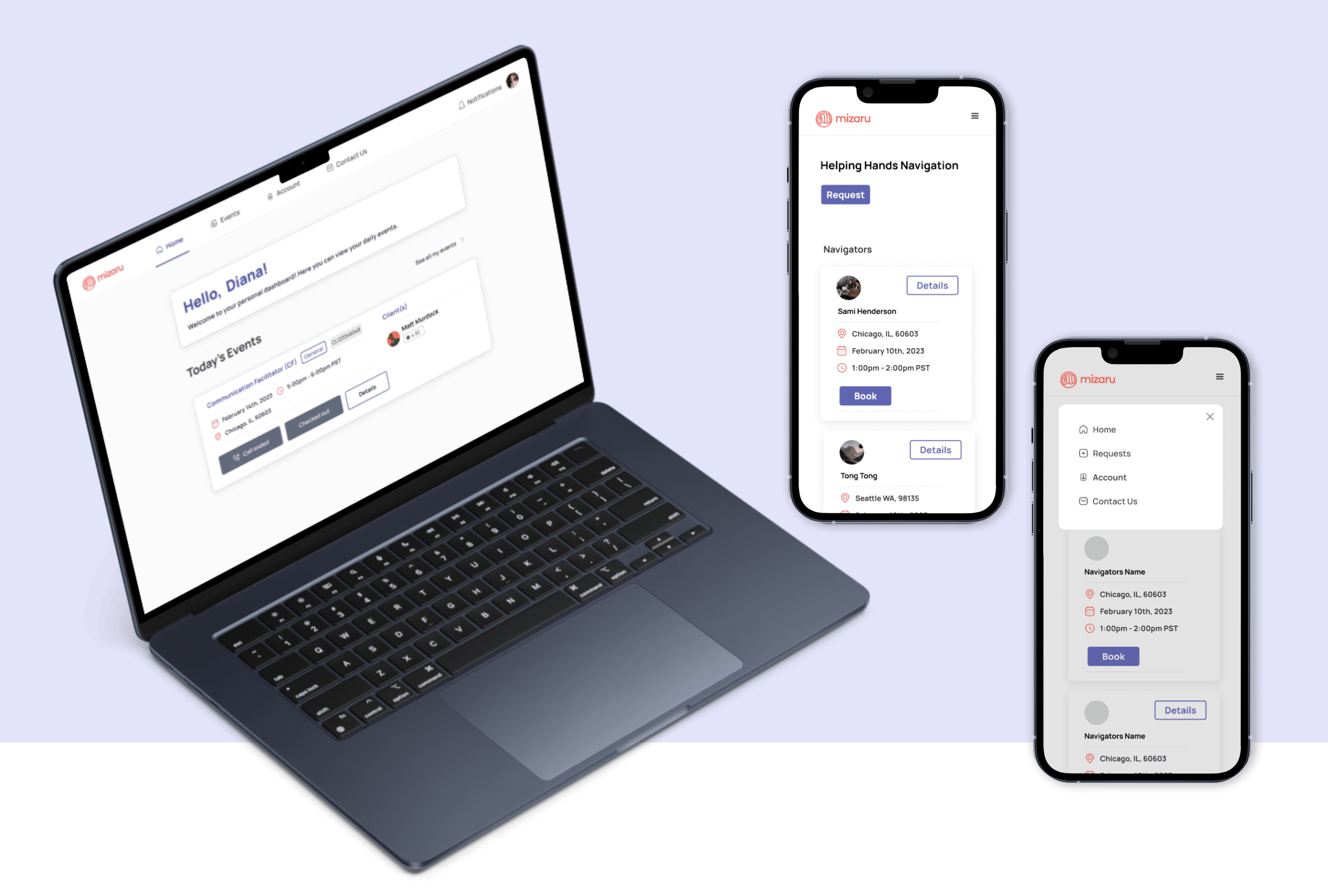
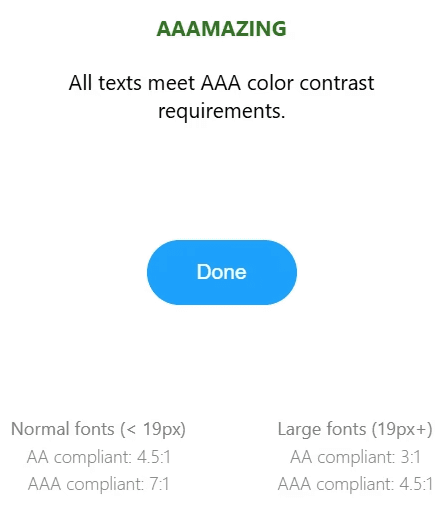
Mizaru → Built with WCAG AAA compliance, ensuring full accessibility.
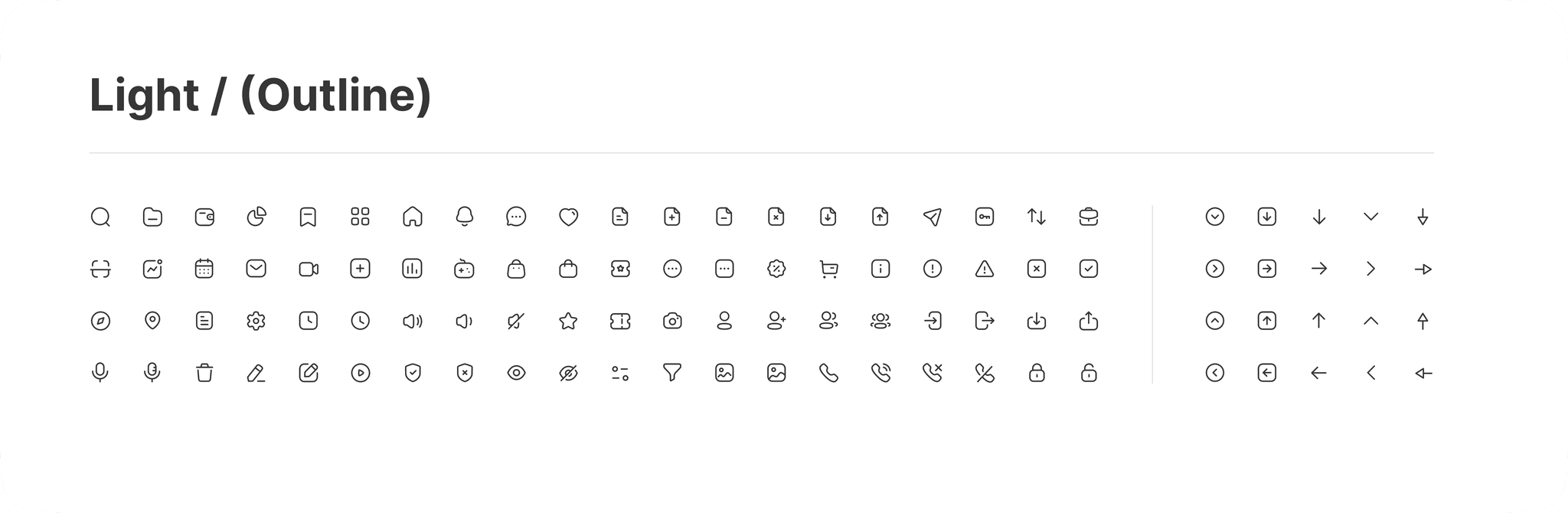
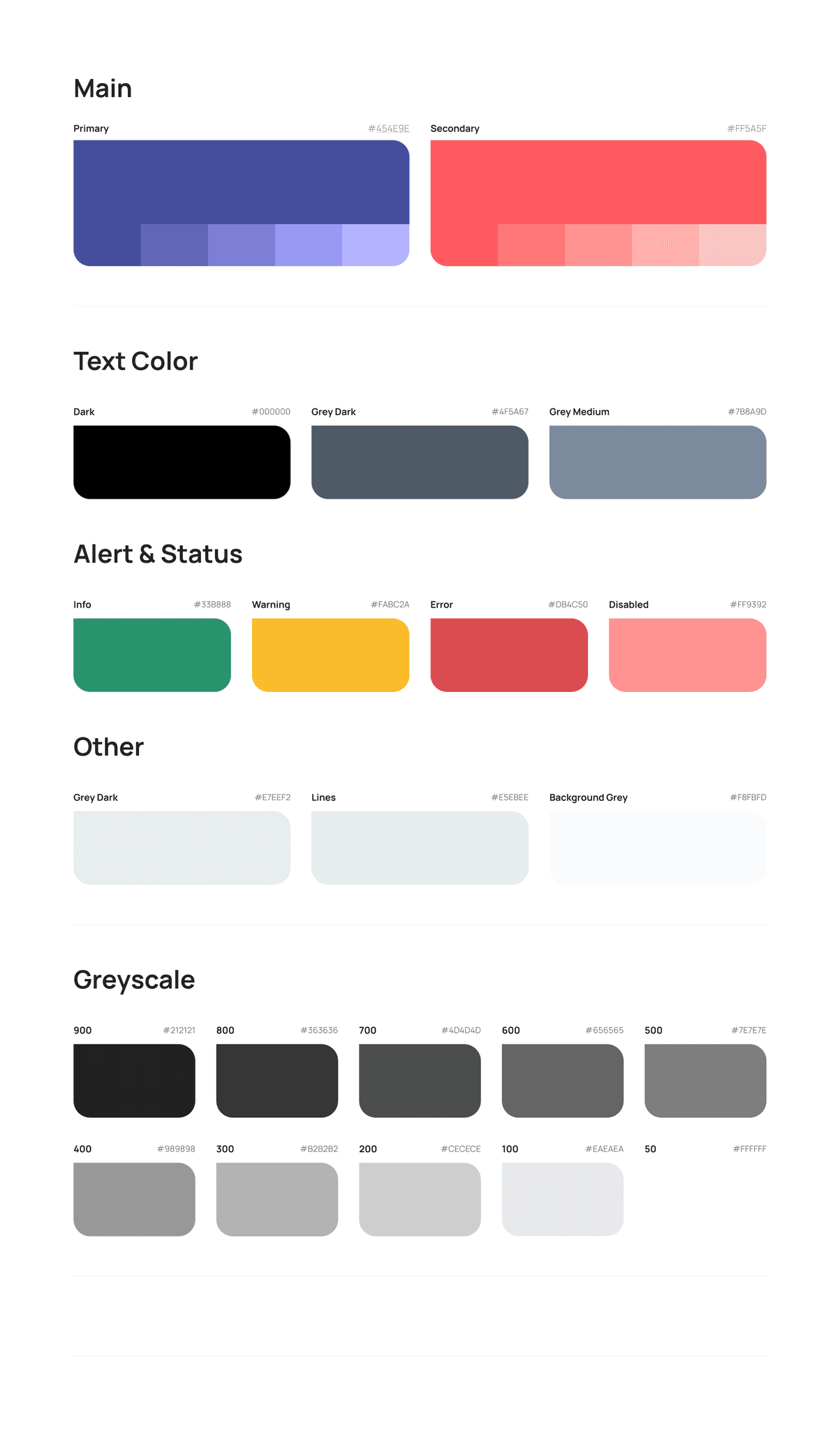
Design System

Improvements

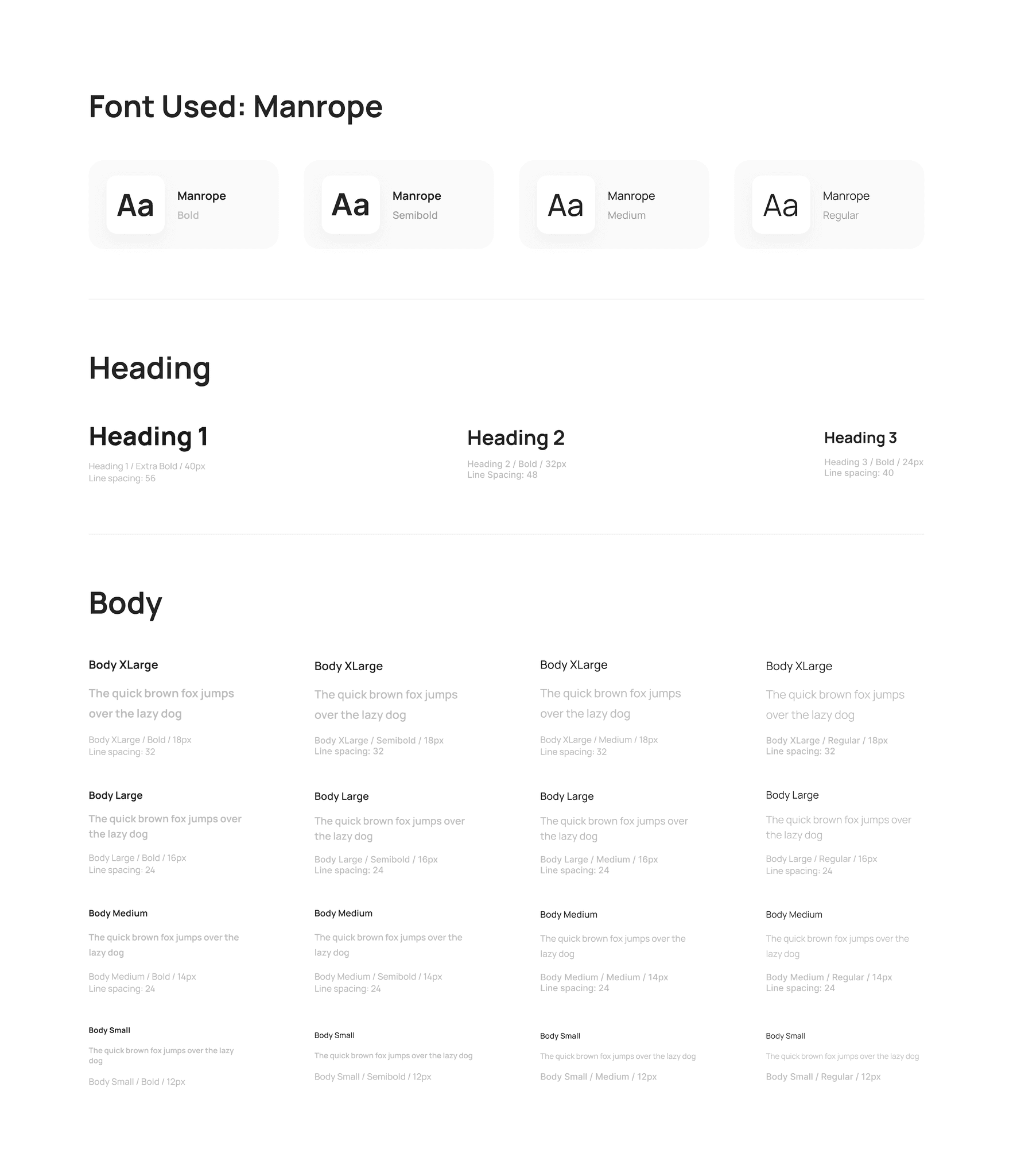
  • Updated design system to meet WCAG AAA standards, improving legibility for users with low vision and screen readers.

  • Simplified the interface structure and layout, reducing unnecessary visual noise and making navigation more intuitive for all users.
Moving Forward

Blind and deaf users can now book navigators and translators without assistance!

Reflection

I wish I had more time to conduct in-depth qualitative research with end users. While I gained valuable insights from the founder, who is partially blind and fully deaf, direct input from a broader range of customers would have strengthened the design and uncovered additional perspectives.

I wish I had more time to conduct in-depth qualitative research with end users. While I gained valuable insights from the founder, who is partially blind and fully deaf, direct input from a broader range of customers would have strengthened the design and uncovered additional perspectives.

I wish I had more time to conduct in-depth qualitative research with end users. While I gained valuable insights from the founder, who is partially blind and fully deaf, direct input from a broader range of customers would have strengthened the design and uncovered additional perspectives.